
Debt Consolidation Through Your Home Loan: What It Really Costs (and Saves) in 2026
Reviewed by David Palummo, MFAA-accredited mortgage broker, IQ+ Loans - Updated August 2026
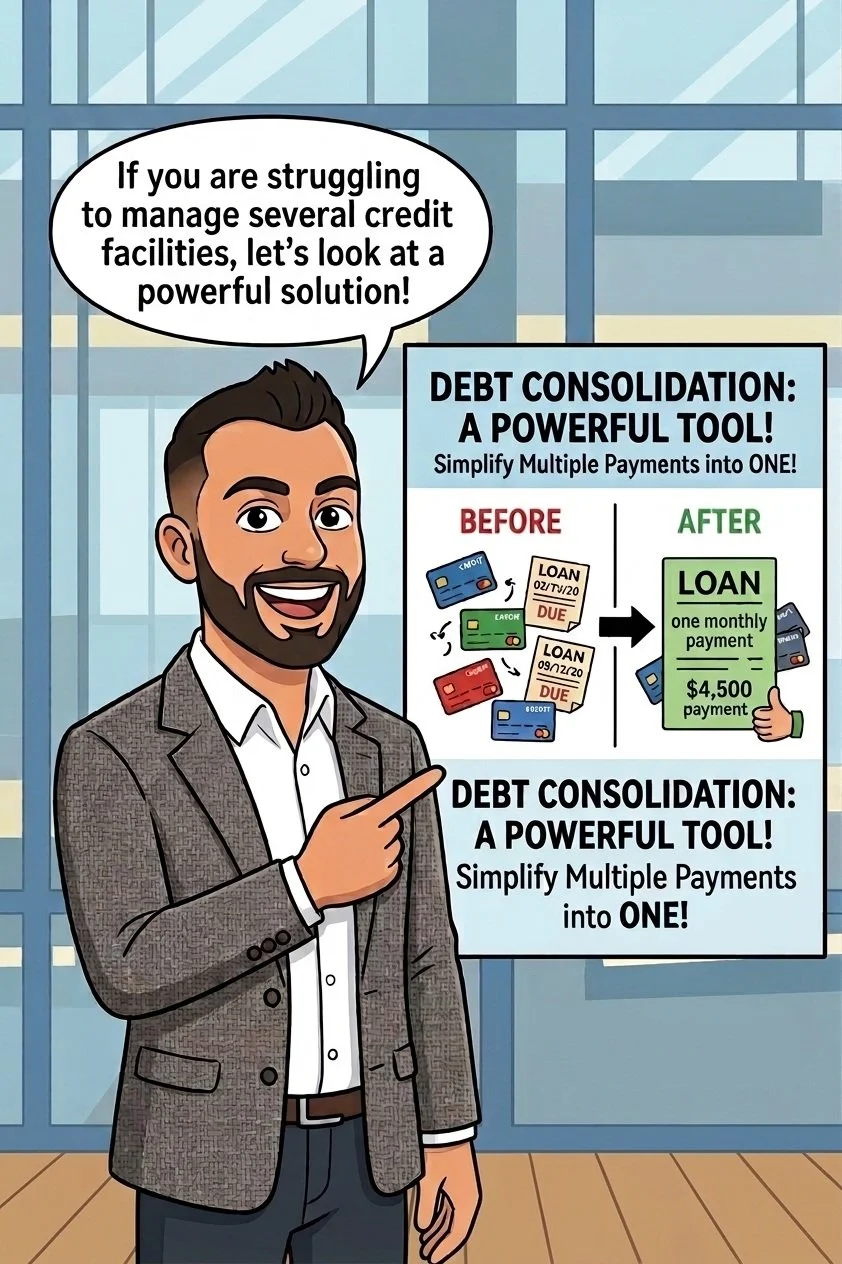
If you're juggling a credit card, a car loan, and a personal loan on top of your mortgage, you're not alone. With the cash rate sitting at 4.35% and cost-of-living pressure still squeezing household budgets across Australia, more homeowners are asking their broker the same question: can I roll all of this into my home loan and just make one payment?
The short answer is often yes. The more useful answer is that it depends on your numbers, your discipline, and how the loan is structured, and that's where a bit of guidance goes a long way.
In this guide: what debt consolidation through a home loan means, why the current rate gap makes it appealing, the trade-off to weigh up before you commit, who it suits best, how the process works, and answers to the questions we get asked most.
What debt consolidation through a home loan actually means
Debt consolidation is simply combining several debts into a single facility with one repayment. When you do this through your home loan, there are usually two paths: refinancing to a new loan large enough to absorb your other debts, or using the equity you've built up in your property (via a top-up or equity release) to pay them out directly.
Either way, the debt itself doesn't disappear, it moves. A credit card balance or personal loan that was unsecured and short-term becomes part of your mortgage, which is secured against your home and typically repaid over a much longer period.
Why homeowners consider it
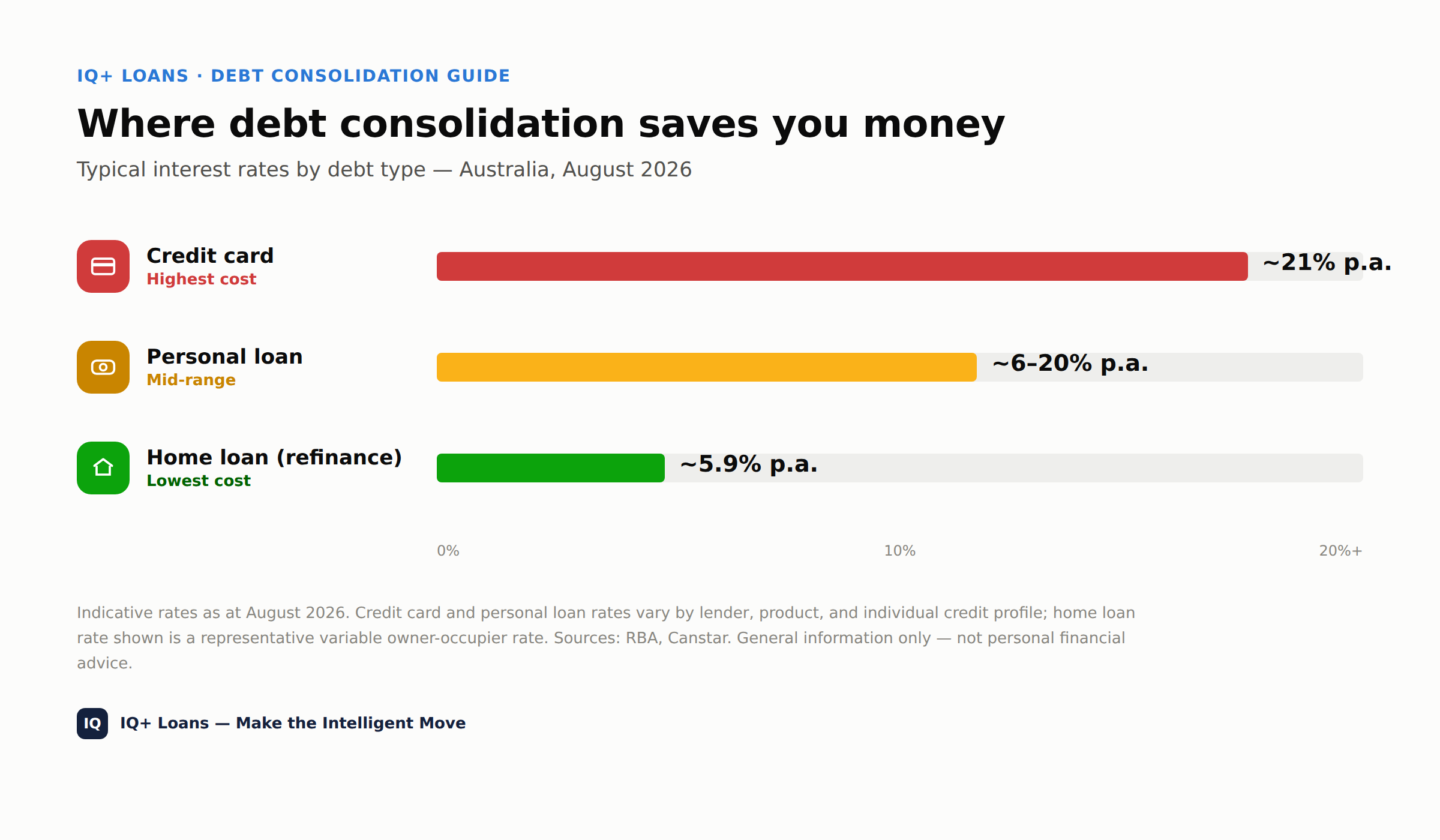
The appeal comes down to interest rates and cash flow. Right now, variable home loan rates for owner-occupiers are broadly sitting in the high-5% to low-6% range, while standard credit card purchase rates are commonly around 20%+ and personal loan rates can range anywhere from roughly 6% to well over 20% depending on your credit profile and the lender. Moving debt from a 20%+ card onto a home loan at around 6% can significantly cut the interest you're paying each month.
Beyond the rate, there's the simplicity of one repayment instead of four or five, each with different due dates, minimums, and fees. For many people, that alone reduces the mental load of managing debt and lowers the chance of a missed payment showing up on their credit file.
The trade-off nobody should skip
This is the part a good broker will always walk you through before recommending anything: extending a short-term debt over a much longer loan term can mean paying more interest in total, even at a lower rate. A $15,000 credit card balance paid off over three years looks very different, cost-wise, to that same $15,000 spread across the remaining 25 years of a mortgage.
A few things worth checking before consolidating:
Compare the total cost, not just the rate. Look at the comparison rate and the total interest payable over the life of the loan, not just the headline percentage.
Check for exit costs on existing debts. Some personal loans and car loans carry early repayment or discharge fees.
Understand what you're securing. Once unsecured debt is added to your mortgage, it's secured against your home. That changes the risk profile if your circumstances change.
Have a plan for the freed-up cards. Consolidating only works long-term if the credit cards get paid down and stay paid down, rather than being run back up alongside the new, larger mortgage.
None of this means debt consolidation is a bad idea, for a lot of homeowners it's genuinely the most sensible way to get on top of multiple debts. It just means the structure matters as much as the decision.
Who tends to benefit most
Debt consolidation into a home loan is usually most effective for homeowners who have built up meaningful equity, are current on their mortgage repayments, and are consolidating debt that resulted from a one-off event (a renovation, a medical cost, a period of reduced income) rather than ongoing overspending. If spending habits are the underlying issue, consolidating buys breathing room, but it's worth pairing with a realistic budget so the same balances don't creep back.
It's also worth considering the shape of the new loan rather than just the size. Depending on your lender, you may be able to split the consolidated amount onto a shorter sub-loan term so you're not paying off a credit card balance over three decades, while keeping the rest of your mortgage on its existing term.
How the process generally works
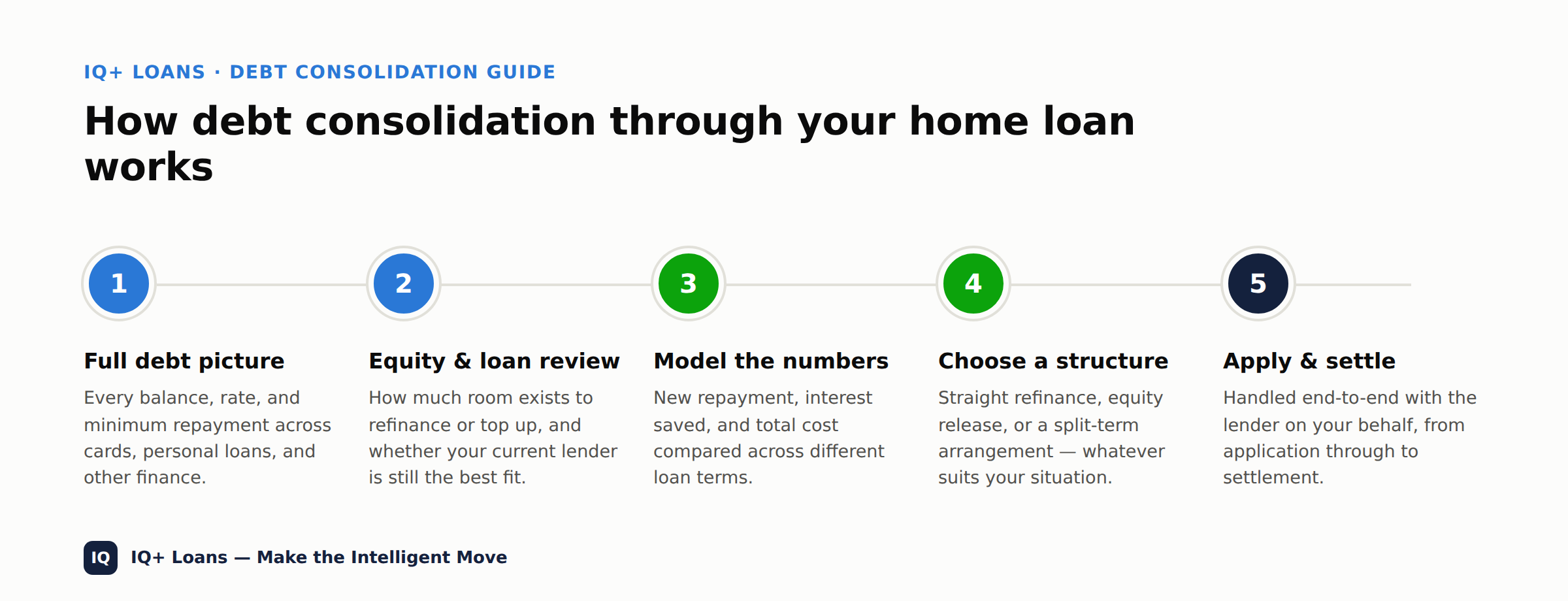
A full picture of your debts - balances, rates, and minimum repayments across every credit card, personal loan, and any other finance.
A review of your current mortgage and equity position - how much room there is to refinance or top up, and whether your current lender or a different one offers the better outcome.
Modelling the actual numbers - what your new repayment looks like, what you save in interest, and what the total cost looks like over different loan terms.
Choosing a structure - a straight refinance, an equity release, or a split-term arrangement, depending on what suits your situation.
Application and settlement - handled end-to-end with the lender on your behalf.
Why talk to a broker before your bank
Your existing bank will only ever show you their own products. A broker's job is to look at your full position - debts, income, equity, and goals -against a panel of lenders to find the structure that actually works out cheapest and most manageable for you, not just the easiest option to process.
At IQ+ Loans, we're MFAA accredited, and a member of AFCA, with access to 100+ lenders. If you're weighing up whether to consolidate debt into your home loan, we can run the numbers with you, lay out the real cost comparison, and help you land on a structure that fits, no obligation, no pressure.
Ready to see what it would look like for your situation? Book a call with IQ+ Loans and make the intelligent move.
Frequently asked questions
Is debt consolidation into my mortgage a good idea? It can be, particularly if you're consolidating high-interest debt like credit cards, have equity available, and are current on your repayments. It's less suited to ongoing overspending without a change in habits, since it doesn't remove the debt, it moves it onto your home loan. Run the numbers with a broker before deciding.
Will consolidating debt hurt my credit score? Refinancing involves a credit check, which can cause a small, temporary dip. Beyond that, consolidating can help your score over time by reducing the number of accounts you're managing and lowering the risk of a missed payment, provided the freed-up credit cards aren't run back up.
Can I consolidate credit card debt without refinancing my whole loan? Sometimes. Depending on your lender and equity position, a loan top-up or redraw may let you add the debt to your existing loan without a full refinance. A broker can tell you whether that's available to you or whether a refinance gets you a better overall outcome.
Does consolidating debt into my home loan mean I'll pay more interest overall? It can, if the debt is stretched across your full remaining loan term. Many lenders let you put the consolidated amount on a separate, shorter sub-loan term so you're not paying off a credit card balance over 25–30 years. This is one of the first things a broker should model for you.
How much equity do I need to consolidate debt into my home loan? It depends on the lender and loan-to-value ratio (LVR) they'll allow, generally up to 80–90% LVR without lenders mortgage insurance considerations coming into play. A broker can assess your specific equity position against current property value and outstanding loan balance.
This article is general information only and doesn't take into account your personal financial situation or objectives. It isn't personal financial advice. Rates mentioned are indicative as at August 2026 and change regularly, speak with an IQ+ Loans broker for current rates and options tailored to your circumstances. Credit criteria, terms, and conditions apply, and lending is subject to approval.