
Rental Vacancy Rates 2026: What It Means for Property Investors
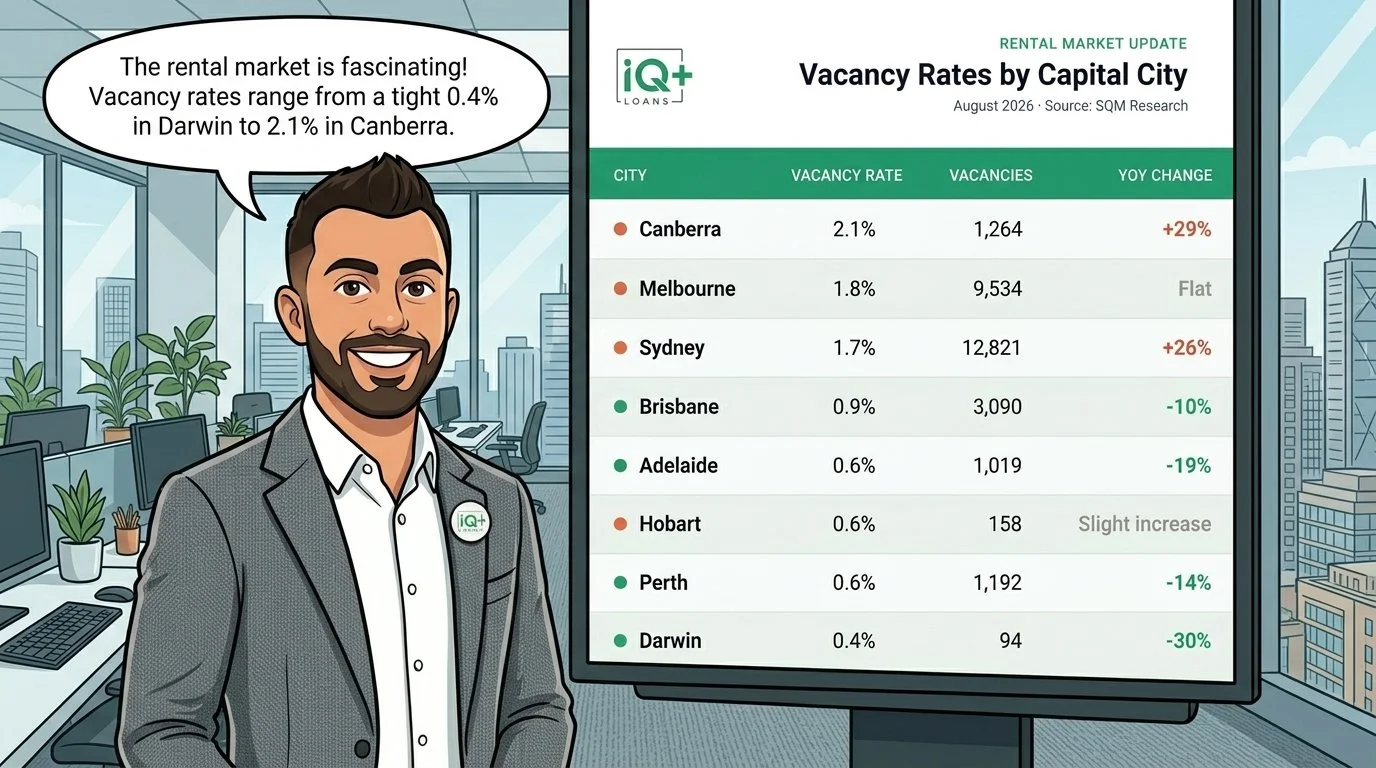
Australia's national rental vacancy rate held steady at 1.3% in August 2026, according to the latest SQM Research data. On the surface, that sounds like more of the same tight rental market we've grown used to. But look past the headline number and a different story emerges: the rental market is splitting in two.
Sydney and Melbourne are showing genuine signs of loosening, while Perth, Adelaide and Darwin remain as tight as ever. For property investors, that divergence matters more than the national average ever could, it's starting to reshape where rental growth, yield and financing opportunity are heading over the next six to twelve months.
The National Picture: Vacancy Rate Holds at 1.3%
SQM Research's August 2026 report puts the national vacancy rate at 1.3%, unchanged from July but up from 1.2% a year earlier. That's 41,039 vacant rental dwellings nationally, around 8.7% more than in August 2025, or roughly 3,300 additional vacancies.
Rents have kept climbing on paper: the national combined advertised rent sits at $701.53 a week ($793.76 across the capital cities), up 7.3% on a year ago. But the monthly trend tells a different story, rents were essentially flat over the 30 days to 4 September, with house rents down 0.1% and unit rents up just 0.2%. As SQM Research's Louis Christopher puts it, the annual growth figure reflects "history" rather than where the market is heading right now.
Vacancy Rates by Capital City (August 2026)
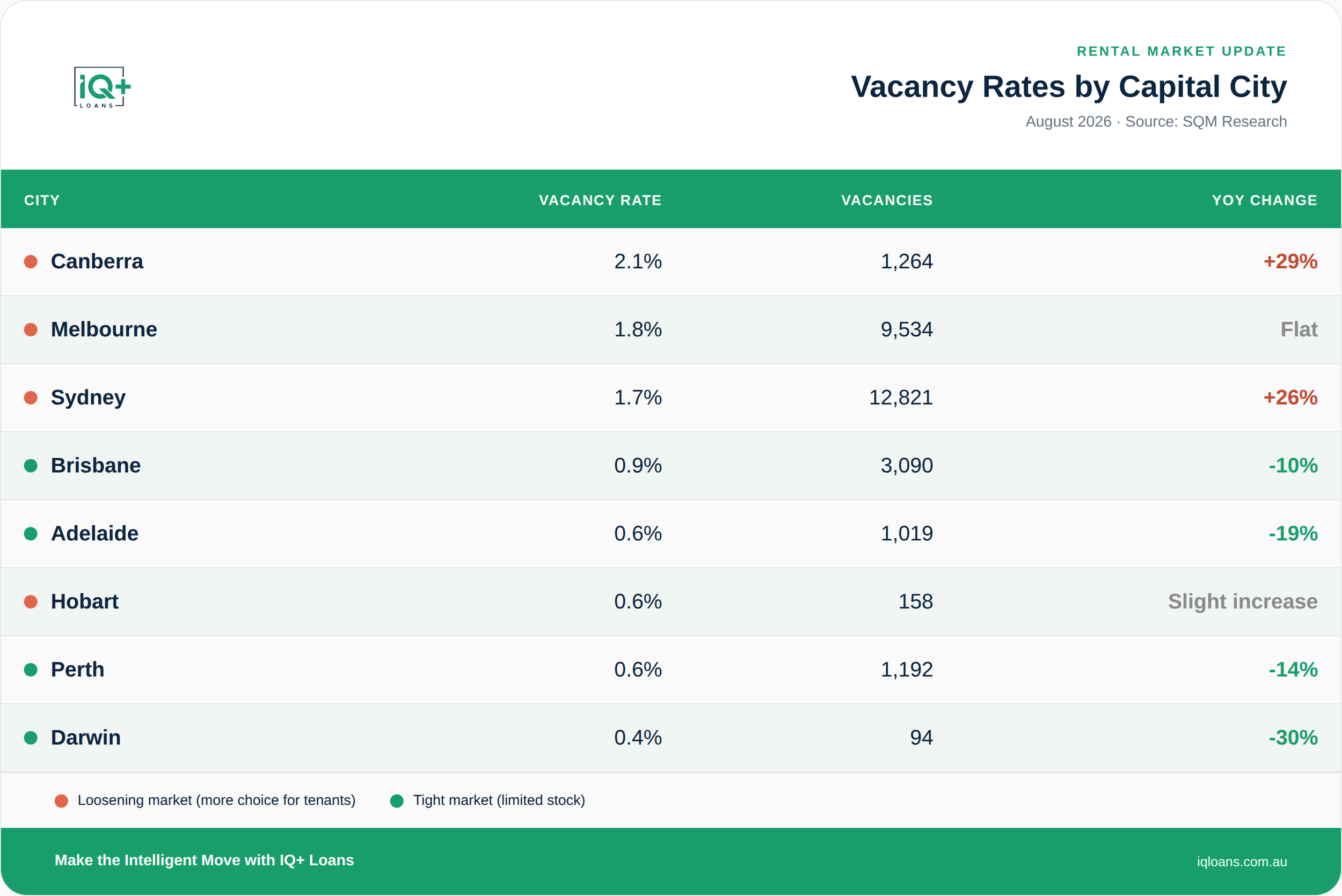
The spread here is the real story. Sydney, Melbourne and Canberra are all loosening, vacancies climbing well above last year's levels. Perth, Adelaide and Darwin are moving the other way, with vacancies down 14–30% year-on-year and virtually no slack left for tenants.
Sydney's Rental Market Has Turned
Of all the capitals, Sydney shows the clearest sign of a market that has changed direction. Vacancies are up 26% year-on-year to 12,821 dwellings, and house rents actually fell 0.6% over the month. SQM Research describes it plainly: Sydney is the "clearest case of a capital city rental market that has turned."
That's a meaningful shift after several years of landlords holding the upper hand. Tenants in Sydney now have more choice, which typically means slower rent growth and, in some pockets, softer asking prices as owners compete to fill vacancies rather than the other way around.
What This Means for Property Investors
A single national vacancy rate has never told the whole story, but the gap between cities is now wide enough to actively shape investment strategy:
Sydney, Melbourne and Canberra: proceed with a longer view. Rising vacancies mean less pricing power for landlords in the near term. Existing owners may see rental growth stall or reverse slightly this leasing season; new buyers should factor softer near-term rent growth into their numbers rather than extrapolating last year's increases.
Perth, Adelaide and Darwin: still tenant-starved. Vacancy rates of 0.4–0.6% leave almost no slack, and falling vacancies year-on-year suggest new supply isn't keeping pace with demand. These markets still favour landlords on rent growth, though entry prices have already moved for many investors chasing this trend.
Brisbane: a market in between. A 0.9% vacancy rate is tight by historical standards but has eased slightly, giving it more balance than the smaller capitals without Sydney and Melbourne's degree of loosening.
Whichever market you're weighing, the financing side matters as much as the rental yield. A tighter vacancy market can support a stronger rental income assumption in serviceability calculations, while a loosening market may call for more conservative numbers and a buffer for vacancy periods. Getting the loan structure right — interest-only periods, offset accounts, fixed vs variable splits — is often what determines whether a property remains cash-flow positive through a softer patch.
What to Watch This Spring and Summer
Winter typically produces softer asking rents as fewer people move, so the real test comes during the October–January leasing season. SQM Research expects the national vacancy rate to drift up to 1.4–1.5% by December as seasonal listings increase, with Sydney potentially reaching 1.9%.
If rents in Sydney, Melbourne and Canberra fail to pick up again once the busier leasing months arrive, it will be a strong signal that the rental upswing in those cities has run its course, at least for now. Brisbane, Perth and Adelaide are expected to retain more room for rent growth, though thin vacancy rates mean there's little buffer if demand keeps outpacing new supply.
Make the Intelligent Move on Your Next Property
A diverging rental market rewards investors who structure their finance around the specific city and property they're buying, not last year's national averages. Whether you're chasing yield in a tight market like Perth or Adelaide, or looking for value as Sydney and Melbourne rebalance, the right loan structure can be the difference between a property that pays for itself and one that stretches your cash flow.
At IQ+ Loans, our MFAA-accredited brokers compare options across 100+ lenders to build a finance strategy around your goals, not a one-size-fits-all package. Get in touch with the team for a free consultation on your next investment property loan or portfolio refinance.