
How to Ask Your Lender for a Lower Interest Rate (and What to Do If They Say No)

If you have a home loan, one 10-minute phone call could save you thousands of dollars a year. The Reserve Bank lifted the cash rate to 4.60% in September 2026, its fourth increase this year, and variable rates are now at 15-year highs. Many borrowers are also paying more than they need to, simply because they have stayed with the same lender for years.
The good news: you can ask your lender for a lower interest rate, and many lenders will say yes. This guide covers why lenders charge loyal customers more, how to prepare, exactly what to say, and what to do if your lender says no.
Why your lender may be charging you more than new customers
Lenders compete hard for new borrowers with sharp rates and refinance cashback offers. Existing customers often don't get those rates automatically. This gap is commonly called the "loyalty tax".
The ACCC's 2020 home loan price inquiry found that borrowers with loans older than five years paid noticeably more, on average, than new borrowers on similar loans. When rates rise, every increase is added to your existing rate, so a rate that was never competitive gets more expensive with each hike.
On a $600,000 loan, a difference of 0.50% is roughly $3,000 a year in extra interest. Lenders know most people never ask. That's why asking works.
Before you call: gather these 5 things
prepared request is much harder to brush off. Have these in front of you:
Your current interest rate and loan type (variable or fixed, principal and interest or interest only), from your app or latest statement.
Your loan balance and an estimate of your property's value, to work out your loan-to-value ratio (LVR). Under 80% LVR usually gets you better rates.
Two or three competing rates for a loan like yours. Compare advertised rates and comparison rates.
Your repayment history. A clean record of on-time repayments is your strongest bargaining chip.
Your fixed-rate end date, if you're on a fixed rate. Break costs can apply if you leave early.
How to ask your lender for a lower interest rate: 6 steps
Call the right team. Ask for the "retention" or "discharge" team, not general enquiries. They have authority to offer discounts.
Be clear and specific. Tell them your current rate, your balance, and the competing rate you've found.
Mention that you're considering refinancing. You don't need to bluff. Saying you're comparing options is enough.
Ask for a specific number. "Can you match the [X]% I've been offered elsewhere?" works better than "Can you do anything for me?"
Get it in writing. Ask for the new rate, the date it applies from, and confirmation that no fees apply.
Check your next statement. Confirm the new rate has been applied and your repayments have changed.
Phone or email script you can use
"Hi, I have a home loan with you. My current variable rate is [X]% on a balance of about $[X], and my LVR is around [X]%. I've always made my repayments on time. I've found lenders offering [X]% for a similar loan, and I'm considering refinancing. Before I do, I'd like to give you the chance to review my rate. Can you match [X]%, or what's the best rate you can offer?"
If the first person can't help, politely ask to speak with someone who can approve a rate review.
What to do if your lender says no
A "no" isn't the end of the conversation. It's useful information: your lender has told you what it thinks your loyalty is worth.
Ask again in writing. Some lenders escalate written requests to a pricing team.
Ask what would change the answer. A lower LVR, a different product or a package might qualify you for a better rate.
Look at refinancing. Moving to a new lender can bring a lower rate and sometimes a cashback. Cashback offers are still available from a number of lenders.
Check you can qualify. Lenders assess new loans with a 3% serviceability buffer, and APRA's debt-to-income limits now apply. If your income has dropped or rates have risen a lot, refinancing may be harder than you expect.
Speak to a mortgage broker. A broker can compare dozens of lenders, request pricing on your behalf, and tell you whether refinancing will actually save you money after costs.
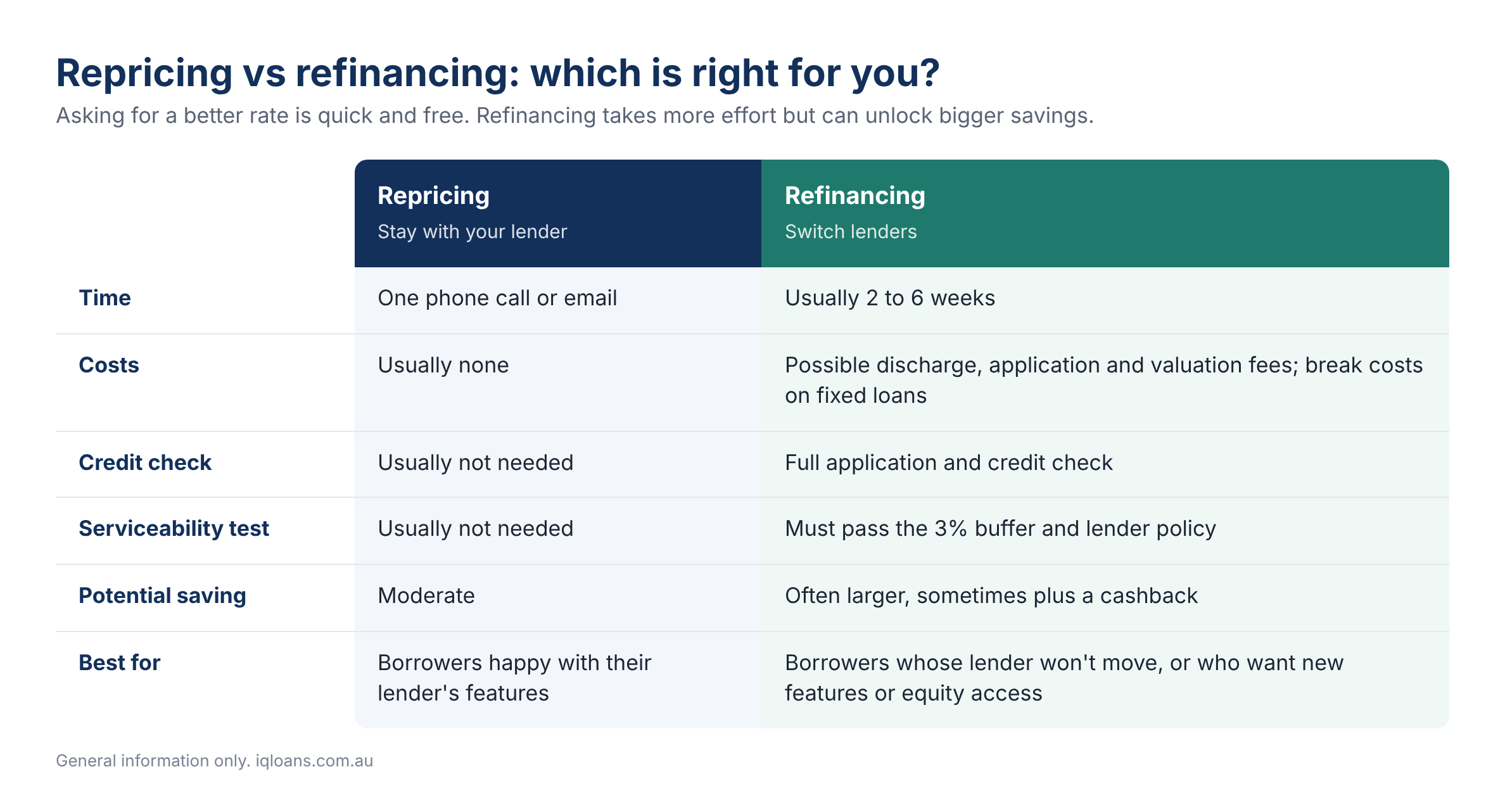
Repricing vs refinancing: which is right for you?
Asking for a better rate (repricing) is quick and free. Refinancing takes more effort but can unlock bigger savings.
Frequently asked questions
Can I ask my bank for a lower interest rate?
Yes. Any borrower can ask for a rate review at any time. Lenders don't advertise it, but retention teams regularly offer discounts to keep good customers.
Does asking for a lower rate affect my credit score?
No. A rate review with your current lender doesn't usually involve a credit enquiry. A refinance application with a new lender does.
How often can I ask for a rate review?
A good habit is to check your rate every 6 to 12 months, and after every RBA rate change.
Can I negotiate a fixed home loan rate?
It's harder during the fixed term. The best time to negotiate is in the 3 months before your fixed rate ends, before it reverts to a higher variable rate.
Will a mortgage broker charge me to review my rate?
Most brokers are paid by the lender, so a rate review is usually free for you. Ask your broker to explain how they are paid.
Get a free home loan rate review
Don't want to make the call yourself? IQ+ Loans can review your current rate, compare it against our lender panel, and tell you whether to reprice or refinance, at no cost to you. Book your free rate review today.
This article contains general information only and does not take into account your objectives, financial situation or needs. Consider whether it is appropriate for you and seek personal advice before acting. Rates, policies and offers mentioned were current as of October 2026 and may change. Credit criteria, fees and charges apply.