
Bridging Finance in 2026: How Upsizers and Downsizers Buy Their Next Home Before Selling

Whether you're upsizing to a bigger family home or downsizing to something smaller and more manageable, you'll often hit the same practical problem: the home you want to buy comes up before the home you're living in has sold. Bridging finance is the tool that solves that timing gap, but it behaves quite differently depending on which direction you're moving, and getting the structure wrong can be an expensive mistake.
In this guide: how a bridging loan actually works, why it plays out differently for upsizers versus downsizers, the eligibility hurdles lenders apply, the costs and risks to watch for, and the downsizer superannuation contribution scheme that adds an extra layer for anyone moving to something smaller.
What a bridging loan actually is
A bridging loan lets you buy your next home using the equity in your current one, before that current home has settled. For the period in between, called the bridging period, you effectively hold both properties and both debts.
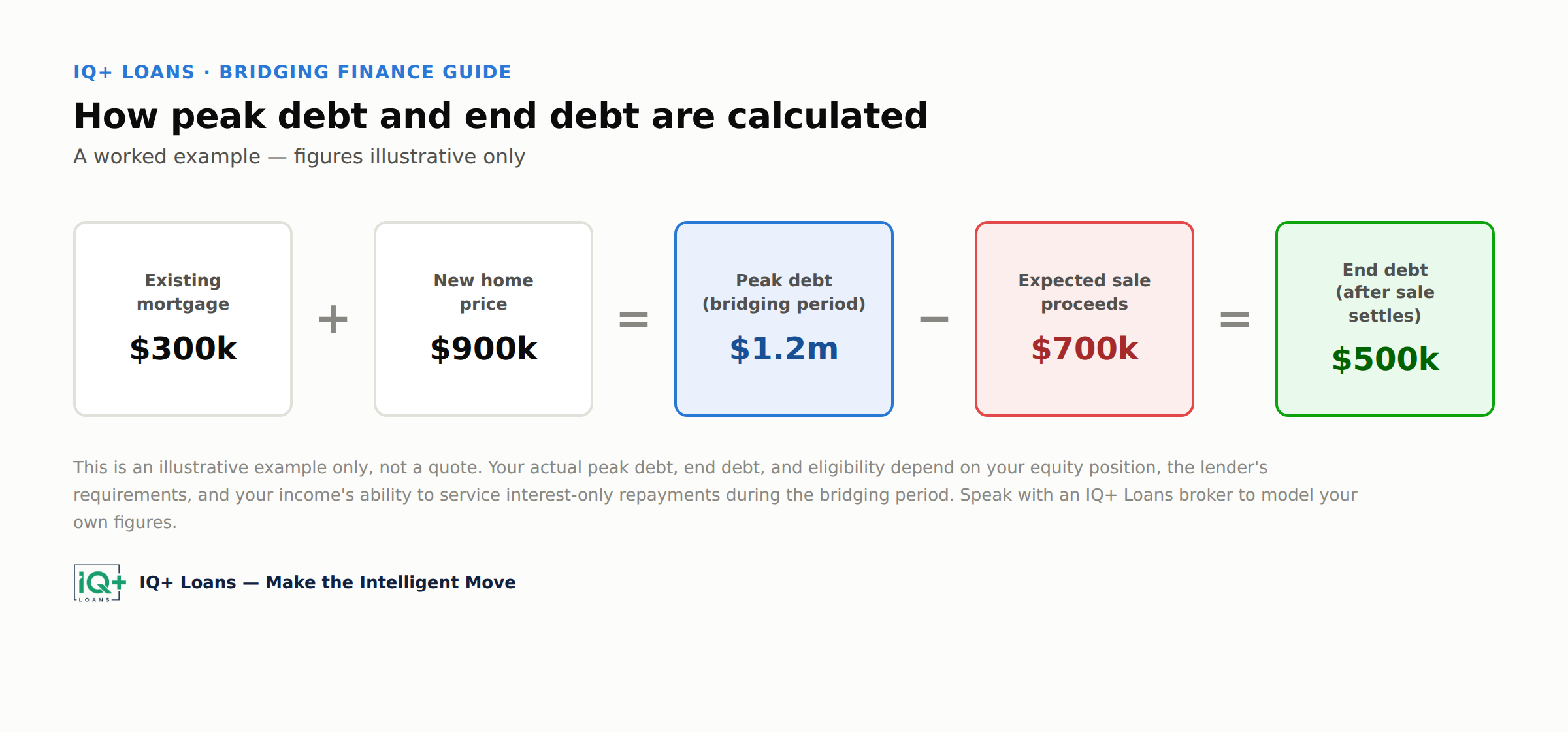
Lenders work this out in two figures. Your peak debt is your new home's purchase price plus your remaining mortgage on your existing home. Your end debt is what's left once your existing home actually sells: peak debt minus the sale proceeds. Bridging loans are usually interest-only during the bridging period, typically capped at around 6 to 12 months, and often priced higher than a standard home loan, reverting to an even higher default rate if you haven't sold by the end of the term.
There are two main types. A closed bridging loan applies when you've already exchanged contracts on the sale of your existing home, so the lender knows exactly when the funds are coming and can price the loan more confidently. An open bridging loan applies when you haven't sold yet, or haven't even listed, which carries more risk for the lender and usually means a higher rate and tighter conditions.
How this plays out for upsizers
For upsizers, the new home almost always costs more than the one being sold, so the peak debt is meaningfully larger than the existing mortgage, and there's usually a real end debt left over once the sale settles, an ongoing, larger mortgage on the bigger home. The size of that end debt, and whether it fits comfortably within your borrowing capacity at today's rates, is the main thing worth stress-testing before committing. We've covered the current market conditions shaping that decision, city by city, in our upsizing guide.
How this plays out differently for downsizers
Downsizers are usually moving from a more expensive home to a cheaper one, which flips the maths. The end debt is often small, and in some cases there's no end debt at all, with leftover funds once the sale settles and the bridging loan is repaid. That changes what matters most: less about long-term serviceability of a bigger loan, more about comfortably covering interest-only repayments on the full peak debt during the bridging period itself, often on a reduced or semi-retired income.
There's also a scheme unique to downsizers worth knowing about. If you're 55 or older and have owned your home for at least 10 years, you can contribute up to $300,000 each ($600,000 per couple, capped at your actual sale proceeds) into superannuation under the downsizer contribution scheme, within 90 days of receiving the sale proceeds. It's a genuinely useful way to boost retirement savings from the sale, though it's worth knowing it isn't exempt from the Age Pension assets test, a common misconception, since the extra super balance is still counted as an asset. It's worth talking to a financial adviser about the pension implications alongside your broker about the finance itself.
The eligibility hurdle lenders apply
Bridging finance isn't available to everyone by default. Most lenders want to see meaningful equity in your existing property, often requiring at least 20% of the peak debt to be covered by that equity, and they'll assess your ability to service interest-only repayments on the full peak debt for the length of the bridging period, not just your eventual end debt. A realistic, well-supported valuation of your current home matters more here than almost anywhere else in the process, since an optimistic estimate that doesn't hold up at sale time is exactly how bridging arrangements get expensive.
Costs and risks common to both
Independent of which direction you're moving, a few things catch people out. Valuation fees typically apply to both properties, not just the new one. If your existing home takes longer to sell than expected, interest on the full peak debt keeps accruing, and many lenders switch to a higher default rate once the initial bridging term expires. And if you decide to refinance away from your existing lender partway through, break costs can apply on top of everything else.
Alternatives worth weighing up
Bridging finance isn't the only way to manage the timing gap. Selling first and renting in between removes the twin-debt risk entirely, at the cost of moving twice and buying under some time pressure. A simultaneous settlement, selling and buying on the same day, avoids bridging finance altogether but requires both sides of the transaction to line up, which isn't always achievable. For downsizers specifically, some choose to sell first purely to lock in a firm sale price before deciding what to buy, since the amount available for the downsizer super contribution depends on the actual sale proceeds.
Why talk to a broker before you commit to a structure
Whether bridging finance makes sense, and which type suits you, depends heavily on your equity position, your income, and how confident you can be about your existing home's sale price and timeline. Getting this modelled properly before you make an offer is what keeps a bridging arrangement a useful tool rather than an expensive surprise.
At IQ+ Loans, we're MFAA accredited with access to 100+ lenders. If you're weighing up bridging finance as an upsizer or downsizer, we can run the numbers against your actual equity and income position.
Ready to see what your options look like? Book a call with IQ+ Loans and make the intelligent move.
Frequently asked questions
How is a bridging loan different from a normal home loan top-up?
A top-up increases your existing loan against your current property alone. A bridging loan lets you hold two properties and two debts at once, purchase price of the new home plus your existing mortgage, calculated as a single "peak debt" figure, until your existing home sells and that debt reduces to your ongoing "end debt."
Do downsizers actually need a bridging loan if they're moving to something cheaper?
Not always, but many still use one, particularly if a good downsizing opportunity comes up before their current, larger home has sold. Because the end debt is typically small or nonexistent once the sale settles, the bridging period itself, and comfortably covering interest-only repayments during it, is usually the main thing to plan around.
Is the downsizer super contribution exempt from the Age Pension assets test?
No. This is a common misconception. Downsizer contributions can be made regardless of your total super balance and don't count towards standard contribution caps, but the resulting super balance still counts as an asset for Age Pension purposes. It's worth discussing the pension impact with a financial adviser before deciding to downsize.
What happens if my existing home doesn't sell within the bridging period?
Most lenders will move you onto a higher default interest rate once the agreed bridging term (commonly 6 to 12 months) expires, and continued non-sale can eventually force a review of the arrangement. This is why lenders lean heavily on a realistic sale price and timeline upfront, and why an open bridging loan (no confirmed buyer yet) is treated more cautiously than a closed one.
How much equity do I need to qualify for a bridging loan?
It varies by lender, but a common benchmark is needing at least 20% of the peak debt covered by equity in your existing property. Lenders will also check that you can service interest-only repayments on the full peak debt for the bridging period, which is a different test to normal home loan serviceability.
This article is general information only and doesn't take into account your personal financial situation or objectives. It isn't personal financial advice, and nothing here is financial advice regarding superannuation or the Age Pension, seek advice from a licensed financial adviser for those aspects. Figures and rates mentioned are indicative as at August 2026 and change regularly, speak with an IQ+ Loans broker for current rates and options tailored to your circumstances. Credit criteria, terms, and conditions apply, and lending is subject to approval.